
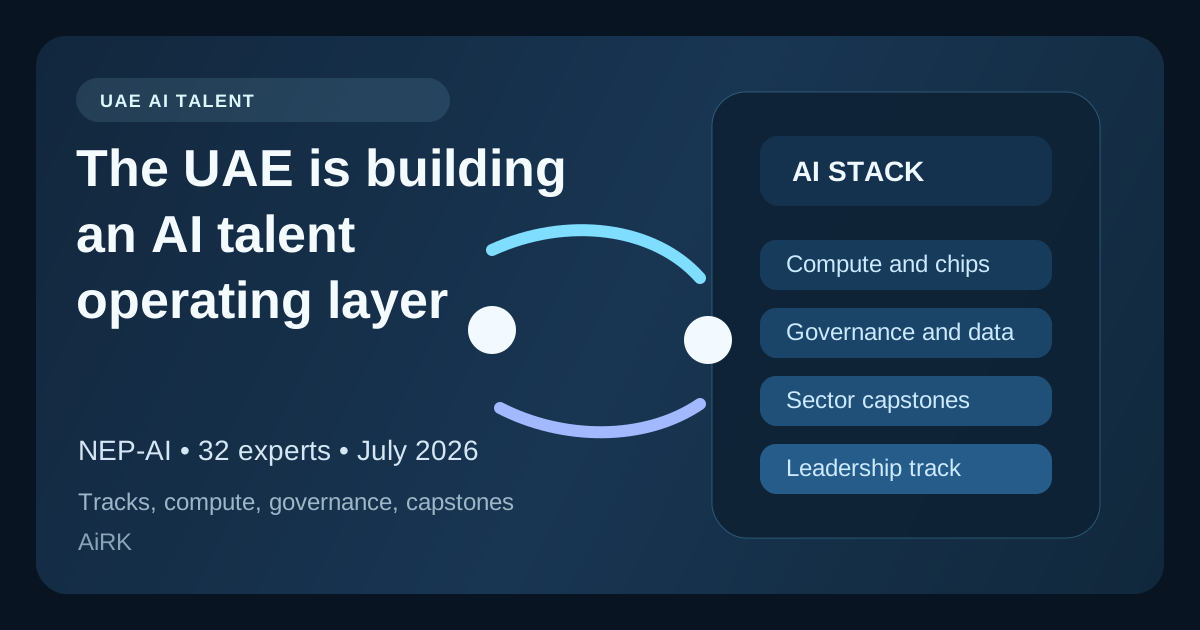
NEP-AI shows the UAE is building an AI talent operating layer, not just a talent pipeline
NEP-AI matters because it moves the UAE's AI talent agenda from attraction and awareness into a structured operating layer built around technical foundations, sector-specific tracks, and capstone delivery.
The UAE has spent much of 2026 showing that AI ambition needs delivery capacity behind it.
NEP-AI is one of the clearest examples so far.
On 21 July 2026, the National Experts Program began the first technical learning phase of its new artificial-intelligence track for 32 Emirati experts, focused on AI Foundations and the AI Stack.
That matters because it pushes the UAE AI talent story beyond recruitment, short courses, and general awareness into a more structured operating layer for national capability.
The direct answer
NEP-AI matters because it is designed to build people who can connect AI strategy to sector-level implementation.
The programme is not only about increasing the number of people interested in AI.
It is about building a cohort that can understand infrastructure, governance, applications, commercialisation, leadership, and capstone execution across real UAE sectors.
The practical implication is straightforward:
the UAE is starting to treat AI talent as implementation infrastructure, not only as a pipeline metric
That is a stronger ecosystem signal than another generic skills initiative.
What the programme actually is
According to the official NEP-AI programme page, this is a specialised track of the National Experts Program created to prepare Emirati experts to help shape the UAE's AI future.
The programme runs from June 2026 to January 2027 and is structured across seven modules, combining:
- academic learning
- mentorship
- real-world application
- panel discussions and study visits
- capstone delivery tied to sector problems
The official programme description says participants are distributed across 25 sectors and a wide set of tracks, including:
Agentic AIGenerative AIArabic-centric LLMs and LocalizationAI Compute and ChipsData Sovereignty and Governance FrameworksAI Cybersecurity and Model ProtectionEnterprise Applications and AutomationRobotics and Autonomous Systems
That breadth matters.
It shows the UAE is not treating AI talent as one narrow engineering category.
It is treating talent as a national capability stack spanning compute, models, policy, localisation, enterprise delivery, and sector transformation.
Why the July technical module matters
The official WAM update on the first technical module is useful because it shows what the programme is prioritising first.
Module 1 is not centred on prompting tricks or isolated use-case demos.
It is centred on:
- the AI stack
- compute and specialised chips
- energy and supply-chain constraints
- data architecture and governance
- deployment inside organisations
The participants also visit TII and ADIA Lab, which connects the learning journey to actual UAE research and infrastructure institutions.
That is an important signal.
It suggests the UAE wants at least part of its next AI leadership layer to understand how systems are built and scaled in practice, not only how to buy or use applications.
Why this is different from a normal talent-pipeline story
Many national AI skills initiatives stop at awareness, certifications, or broad inclusion targets.
NEP-AI appears to be aiming at a narrower and more strategic layer: people who can translate AI into sector outcomes with organisational credibility.
The earlier official cohort announcement makes that clearer.
WAM reported that the programme selected 32 experts from more than 1,000 applicants, with participants drawn from public institutions, state-owned enterprises, and the private sector, and with capstone projects expected to address real sector challenges.
That matters because the UAE's AI bottleneck is no longer only access to information.
It is increasingly access to people who can:
- understand technical constraints
- evaluate sector use cases
- sponsor adoption responsibly
- link policy ambition to delivery discipline
- turn AI projects into measurable organisational outcomes
That is closer to institution-building than to training volume.
What professionals and organisations should notice
For the UAE market, the useful lesson is that AI capability is being organised more deliberately.
The programme's structure implies growing demand for professionals who can operate across technical and strategic layers rather than staying in one silo.
Government entities, large enterprises, and strategic sectors should notice at least three things:
- AI leadership is being tied to sector-specific implementation, not only general literacy
- infrastructure and governance knowledge are being treated as core, not optional
- capstone-based delivery is becoming a visible way to convert learning into institutional value
For training providers, employers, and operators, this raises the bar.
The next talent market will reward people who can combine architecture literacy, business judgment, governance awareness, and deployment discipline.
What not to overclaim
This does not prove that the UAE has already solved the AI talent challenge.
It does not yet show:
- how many capstones will lead to production deployment
- which sectors will generate the strongest results
- whether the programme will scale beyond a selective cohort
- how the long-term impact of the experts will be measured
So the disciplined conclusion should stay narrower.
The significance of NEP-AI is that the UAE is building a more operational layer of AI talent development, not that every capability bottleneck has already been removed.
AiRK view for the UAE market
The next phase of the UAE AI economy will be shaped less by who can talk about AI and more by who can implement it across institutions with technical and strategic credibility.
NEP-AI matters because it suggests the country is building that middle layer on purpose: a cohort able to connect compute, governance, applications, and sector delivery. For government teams, enterprises, and workforce builders, that is a stronger signal than another broad awareness campaign.